
Orthotic Insoles for Children
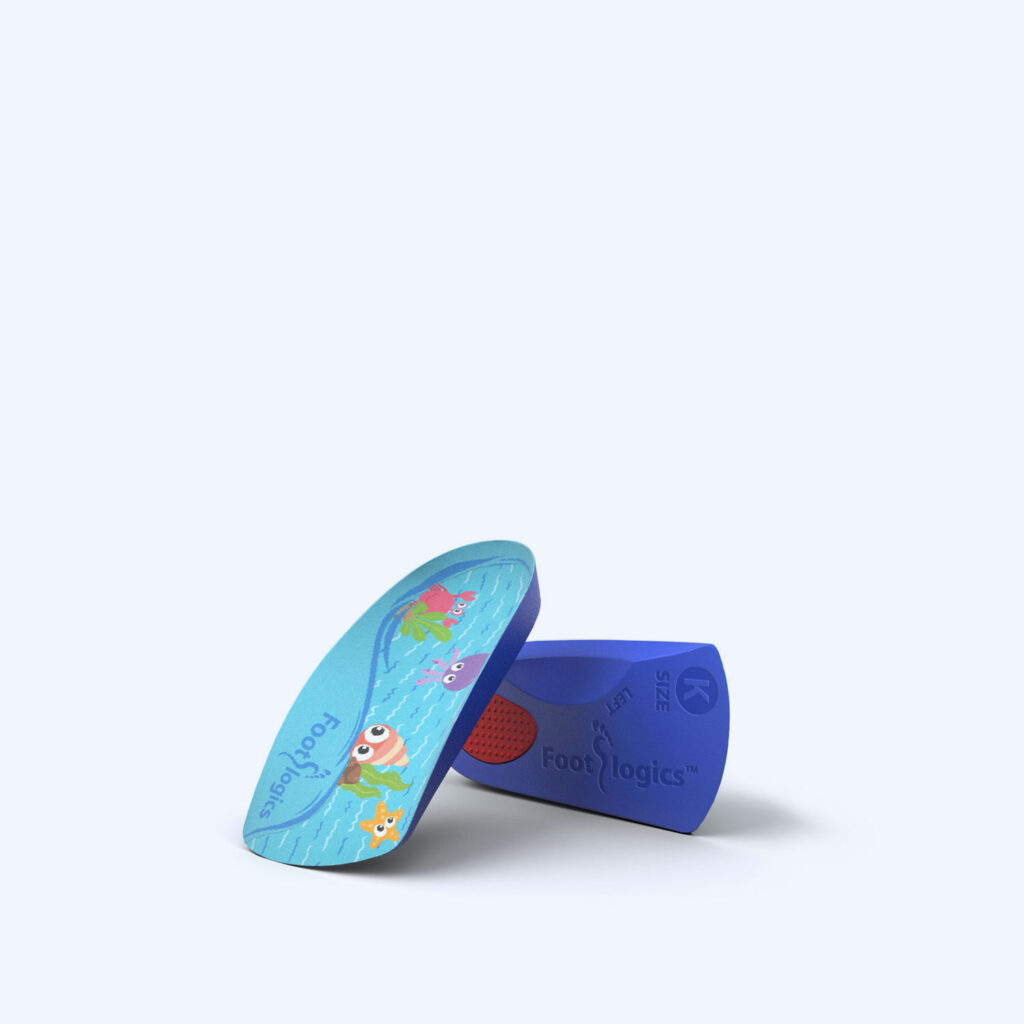
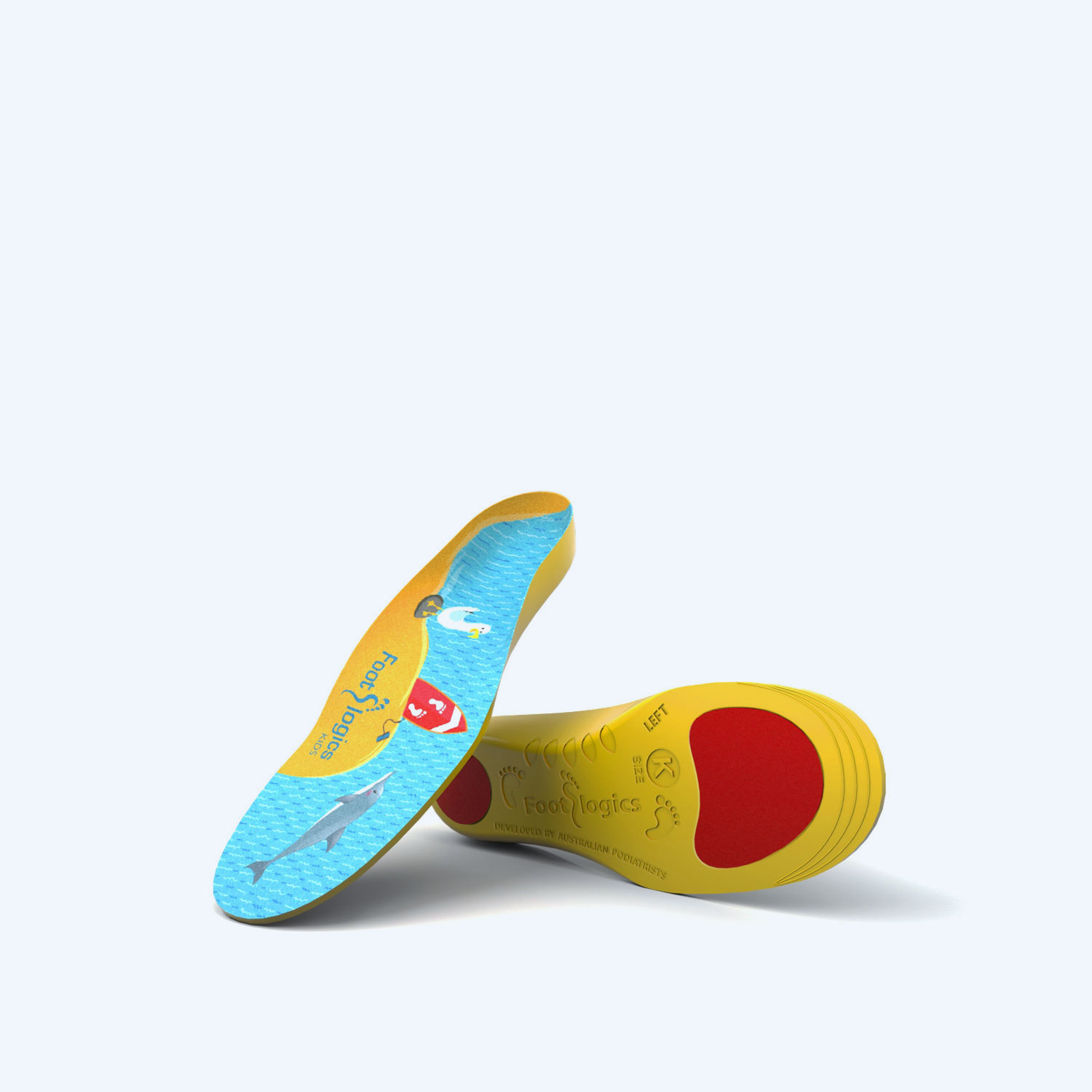
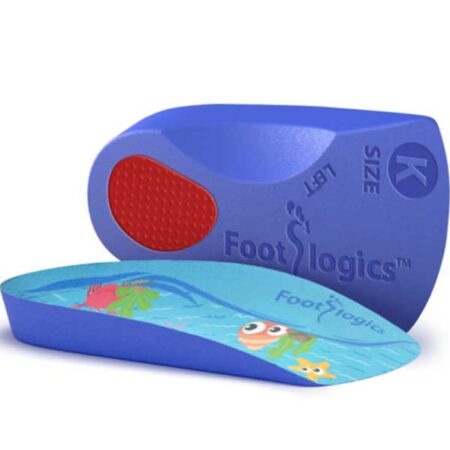
Kids insoles support a child’s arch and heel to ease foot, heel and leg pain from flexible flat feet, Sever’s disease and long days of sport. Most children can start wearing them from age 3–4, once they’re walking steadily. Footlogics Kids insoles come in 3/4 and full-length styles to fit school shoes and runners.
Orthotics for children: A complete guide to kids’ insoles, flat feet and growing feet
Every parent wants their child to run, jump and play without pain. But when a child complains of sore heels after soccer practice, tires quickly on family walks, or stands with ankles that visibly roll inward, it can be hard to know whether the problem is serious or simply part of growing up. This guide covers everything you need to know about orthotics for children, from how small feet develop to when insoles genuinely help, so you can make confident decisions about your child’s foot health.
Overview: How orthotics and insoles help a child’s feet
Two questions drive most parents to research this topic: “What are the best orthotics for children with flat feet?” and “How do I choose the right orthotics for my child’s growing feet?” This article answers both in detail, backed by recent clinical studies.
First, some quick terminology. Children’s orthotics refers to devices that correct or support biomechanical function in the foot and lower limbs. Kids insoles and shoe inserts are broader terms that include cushioning or arch support placed inside footwear. Some products are custom foot orthotics moulded from a cast or scan of the individual foot; others are pre-made, medical-grade insoles designed by podiatrists to address common conditions. Footlogics falls into that second category, offering pre-made orthotic insoles for children that deliver firm arch support, a deep heel cup, and forefoot cushioning without the cost or wait time of custom devices.
The main benefits of pediatric orthotics include improved arch support, better ankle and knee alignment, reduced heel pain, lower muscle fatigue during physical activities, and support for active kids in sports. Children’s orthotics are designed for flexibility and comfort, guiding proper foot development rather than forcing rigid correction. Orthotic insoles can improve comfort and reduce fatigue even in children who simply stand or walk for long periods at school. Early intervention with appropriate insoles can prevent more serious foot problems later in life.
In the sections ahead, you will learn how a child’s feet develop, which common conditions respond well to insoles, how to compare ¾-length and full-length options, and answers to the most frequently asked questions about kids orthotics.
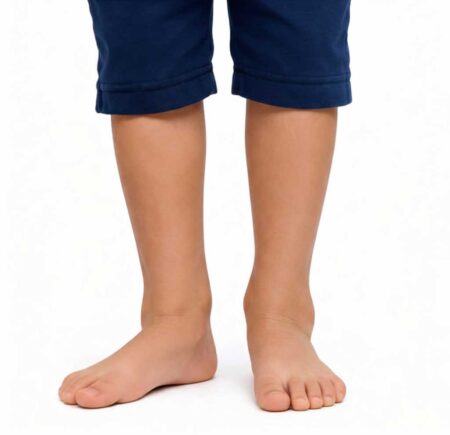
How a child’s feet develop: arches, alignment and milestones
Understanding proper foot development helps parents recognise when something is off. Here is what to expect at each stage:
- Birth to age 2: Babies are born with flat feet. A thick fat pad under the arch and loose ligaments make the sole look completely flat. First independent steps usually appear around 9–12 months, with a wide-based, flat-footed gait.
- Ages 3–5: Arch formation begins. The fat pad thins, ligaments tighten, and the medial longitudinal arch starts to emerge. Research in Czech children found that the most pronounced phase of arch development is largely complete by about age 6 (Novák et al., 2025). During this window, 44–70% of children aged 3–6 have flat feet, a statistic that often surprises parents.
- Ages 5–9: Arches continue to mature. A Taiwanese study that followed 572 children from about age 6.7 to 8.2 found that 70 of the 263 children with flat feet developed arches over that time (Biomedical Journal, 2022).
- Ages 10–teen years: Foot structure is mostly stable, though growth plates (including the calcaneal apophysis at the heel) remain open and vulnerable to overuse injury.
Alignment also shifts during growth. Toddlers commonly display bow legs, which typically resolve by age 3. Knock knees may then appear around age 3–4, usually straightening by 7–8. These are normal phases in lower limb development, not causes for alarm on their own.
Because children’s bones are more responsive to corrective measures than adult bones, well-chosen orthotic support during these formative years can guide alignment without restricting the natural movement a child’s muscles develop through. Gait matures from wobbly first steps to stable heel-to-toe walking by around age 3, and children’s orthotic insoles support natural arch development during this critical period.
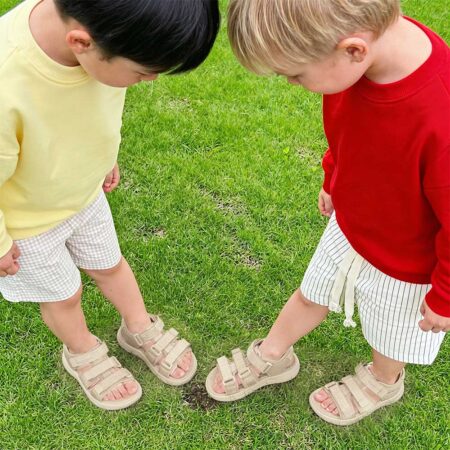
Why some children need orthotics or insoles from a young age
The vast majority of children with flexible flat feet will develop arches naturally and need no treatment at all. However, some children’s feet don’t follow that expected timeline, and the resulting biomechanical strain can ripple up through the ankles, knees, and lower leg.
Children may need orthotics if they have flat feet that persist beyond age 4–5 and cause symptoms and while most outgrow it, persistent flat feet beyond age 4 may require orthotics when combined with pain, fatigue, or gait irregularities. Toe-walking can also indicate a need for pediatric orthotics, as can duck feet posture, frequent tripping, or visible arch collapse under load.
Biomechanical foot problems don’t stay in the foot. Excessive pronation increases internal rotation of the lower limbs, which can contribute to heel pain, knee pain (including Osgood–Schlatter disease), and even lower back discomfort in sporty children. Orthotics redistribute pressure under the foot, guide the ankle and arch into a healthier position, and reduce fatigue during walking and running.
Unlike rigid adult devices, kids orthotics should allow enough flexibility for natural development. A 2024 meta-analysis in Frontiers in Pediatrics confirmed that orthotic intervention in children with flexible flat feet improves radiographic foot posture and reduces pain, particularly in older children. Proper footwear is essential for orthotics to be effective, so pairing insoles with well-fitting shoes matters just as much as the insole itself.
Early intervention can prevent serious foot problems later, so parents who spot early signs of persistent pronation or pain should not wait until symptoms worsen.
Flat feet in children: when it’s normal and when to worry
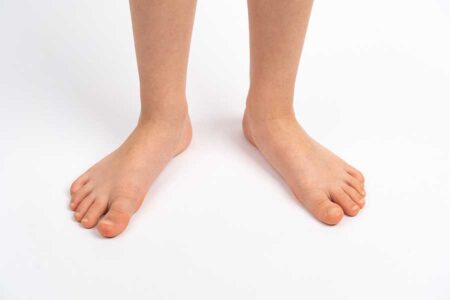
Flat feet (pes planus) means the medial arch sits low or flat against the ground when standing. The distinction that matters most is between flexible flat feet-where the arch reappears on tiptoes or when non-weight-bearing-and rigid flat feet, where the arch is absent in all positions due to structural issues like tarsal coalition.
Flexible flat feet in children are common and often require no intervention. About half of three-year-olds have flat feet, and most develop a normal arch by school age. The flat appearance alone is not a problem.
Red flags that warrant action:
- Pain in the arch, heel, or ankle during or after activity
- Rapid shoe wear along the inner edge
- Muscle fatigue or reluctance to join physical activities
- Frequent tripping compared to other children
- A child experiences discomfort that limits their child’s walk or play
What are the best orthotics for children with flat feet? Choosing orthotics for children with flat feet depends on them experiencing pain or alignment issues. Look for these features rather than a single brand name: firm yet cushioned arch support, a deep heel cup that stabilizes the heel and aligns the foot, medial posting to control over-pronation, forefoot cushioning, and sizes specifically designed for small feet. Footlogics orthotic insoles for children are podiatrist-designed with these exact features, suitable for everyday sneakers, school shoes, and sports footwear.
Many children with flexible flat feet do well with high-quality pre-made insoles. Custom orthotics are more expensive than over-the-counter options but provide targeted support for complex or rigid deformities. In a 2018 consensus survey, podiatrists agreed that prefabricated orthoses should be the first choice when they give enough support, with custom orthoses kept for when they don’t (Dars et al., 2018). Orthotics can help correct flat feet and over-pronation in the majority of symptomatic children without the cost of a fully custom device.
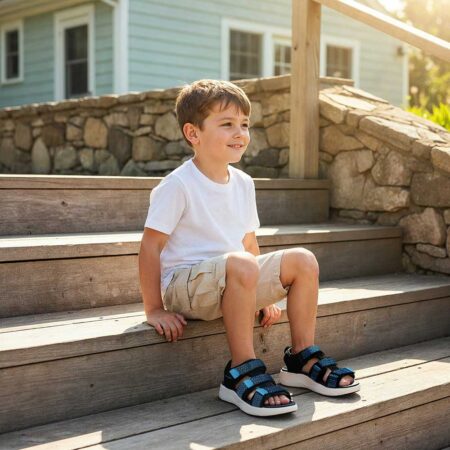
Other common conditions kids orthotics can help
Children’s orthotics and insoles address a range of foot and leg conditions beyond flat feet. Here are the most common conditions parents encounter:
Sever’s Disease (Calcaneal Apophysitis) Sever’s disease is the leading cause of heel pain in children aged 8–14, especially those active in soccer, basketball, and running. The heel growth plate becomes inflamed from repetitive impact and tension from the Achilles tendon. Orthotics can help manage heel pain from Sever’s disease by cushioning the heel and supporting the arch to reduce pull on the growth plate. In a 2021 trial, children with Sever’s disease who wore custom-made foot orthoses for 12 weeks reported much greater pain relief than children who used heel lifts (Alfaro-Santafé et al., 2021). Systematic reviews confirm orthoses are among the most effective conservative treatments for this condition.
Osgood–Schlatter Disease This common cause of knee pain at the tibial tuberosity in pre-teens is aggravated by running and jumping. Poor foot mechanics and over-pronation can increase strain through the kinetic chain. Orthotic support that corrects pronation and improves shock absorption may help reduce knee loading, though direct trial evidence is still limited.
High Arches (Pes Cavus) High arches can lead to instability and pain in children, concentrating pressure on the heel and ball of the foot. These children benefit from extra cushioning, lateral stability, and metatarsal support rather than the arch-lifting approach used for flat feet.
In-toeing and Out-toeing Turning feet inward or outward during walking is common in young children. In-toeing or out-toeing can often be corrected with orthotics featuring wedge modifications.
Orthotics can also assist children with leg length discrepancies through heel lifts built into the insole. For more complex neurological conditions like cerebral palsy, more specialized devices such as a custom ankle foot orthosis are typically required, prescribed by a health care professional rather than purchased over the counter.
Children should be assessed for orthotics if they complain of foot pain, and parents should consult a specialist if a child has persistent foot pain or significant misalignment.
Types of children’s orthotics and insoles: ¾ length vs full length, arch and heel support
Understanding the main insole categories helps parents match the right orthotic device to their child’s needs:
| Feature | ¾-Length Insoles | Full-Length Insoles |
|---|---|---|
| Coverage | Heel through arch | Heel through toes |
| Best for | School shoes, dress shoes, boots | Sports shoes, sneakers, runners |
| Stability in shoe | Good; may shift in high-impact sport | Excellent; stays in place during running |
| Forefoot support | Minimal | Full cushioning under ball of foot |
| Trimming needed | Rarely | Often trim-to-fit using sock liner template |
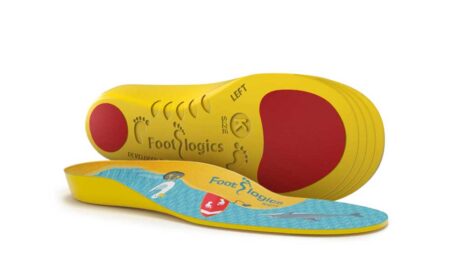
Footlogics Kids orthotics come in 3/4 and full-length options. The full-length version is ideal for active kids who need optimal support during sport, while the ¾-length works well in tighter school shoes.
Key design features to look for in any kids orthotic: a deep, contoured heel cup for stability, firm medial arch support that still allows some flex, shock-absorbing heel padding, and a breathable top cover. Orthotics should not prevent natural muscle development in growing children-the goal is to provide support while still allowing the foot and ankle to move and strengthen.
An ankle foot orthosis (AFO) is a very different category: a rigid brace wrapping the ankle and lower leg, custom-prescribed for neurological or structural conditions. These are rarely recommended for the common biomechanical issues that insoles address effectively.
How to choose the right orthotics for your child’s growing feet
Here is a direct answer to the second key question: how do I choose the right orthotics for my child’s growing feet? Follow this step-by-step approach:
-
Identify symptoms and age. Is your child over 3–4 years old with stable walking? Do they have flat feet with pain, heel pain, or noticeable fatigue? Children’s feet grow rapidly and orthotic fit should be regularly checked.
-
Observe the foot and gait. Watch your child’s gait from behind. Do ankles roll inward? Does the arch collapse when standing? Is shoe wear uneven? Regular evaluation of foot conditions is recommended for growing children.
-
Choose style based on shoe type. Use ¾-length for school or dress shoes, full length for sports shoes and sneakers.
-
Select support level. Pediatric over-the-counter inserts provide a first-line approach for mild discomfort and flexible flat feet. Over-the-counter inserts cannot correct complex biomechanical issues-if symptoms are severe, custom orthotics molded from a child’s foot for specific biomechanical issues may be necessary. Custom orthotics are more expensive than over-the-counter options but provide targeted support.
Sizing and replacement: Match insole size to your child’s shoe size using the manufacturer’s chart. Many full-length insoles are trim-to-fit-cut carefully along the existing sock liner as a template. Orthotic insoles for children typically last 12–18 months, and children’s orthotics should be replaced every 18 to 24 months at most. Check fit every 6–12 months since small feet grow quickly.
When to see a professional: Book a scheduled appointment with a podiatrist, paediatrician, or physiotherapist if pain persists despite good insoles, if there is limping, rigid deformity, or asymmetry between feet.
Practical tips for adaptation:
-
Start with 1–2 hours of wear daily, increasing over 5–7 days
-
Observe changes in posture, activity levels, and your child’s walk
-
Watch for any new discomfort-mild adjustment sensations are normal, but pain is not
Footlogics kids’ insoles and sandals: our approach to children’s orthotics
Footlogics children’s orthotics are designed by Australian podiatrists to sit between generic foam inserts and expensive custom devices. Every insole features a firm biomechanical arch, a deep heel cup for stability, and shock-absorbing cushioning under the heel and forefoot-the same features clinicians look for when recommending orthotic support.
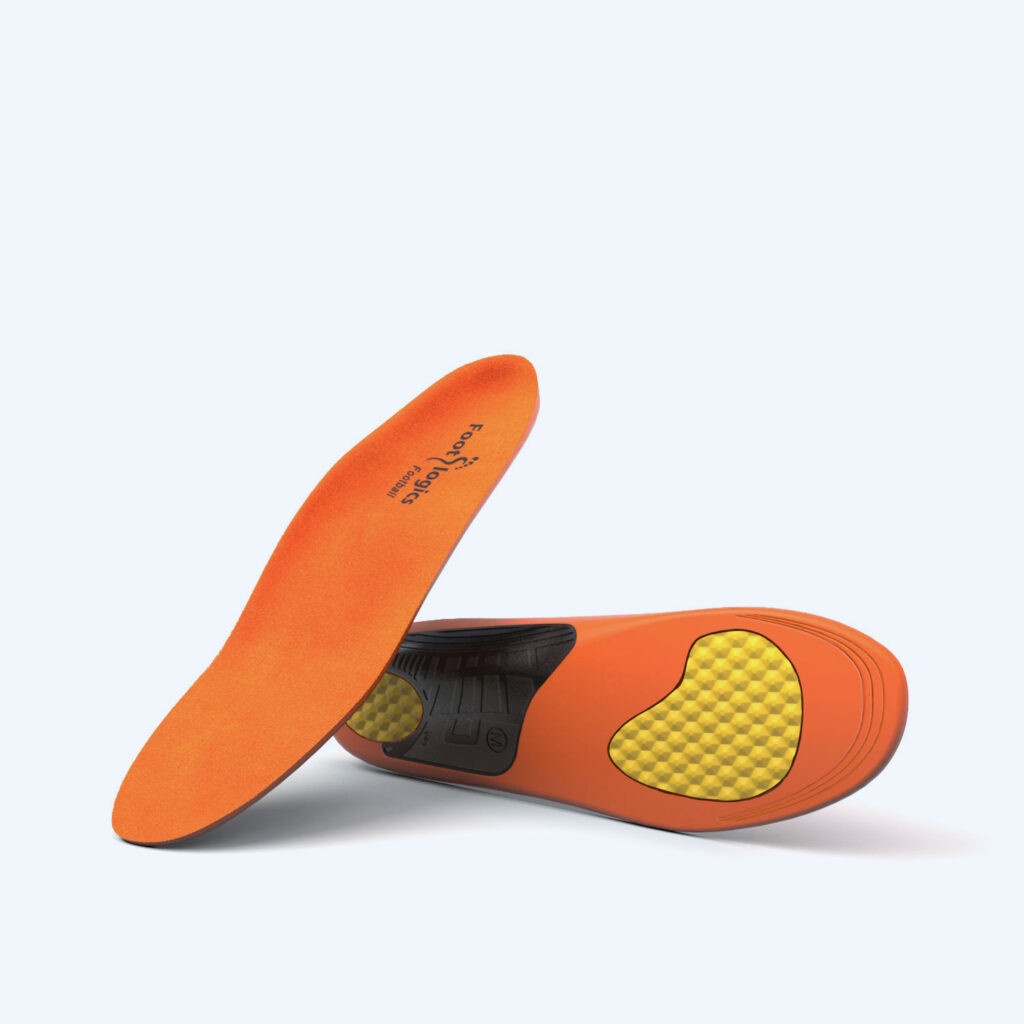
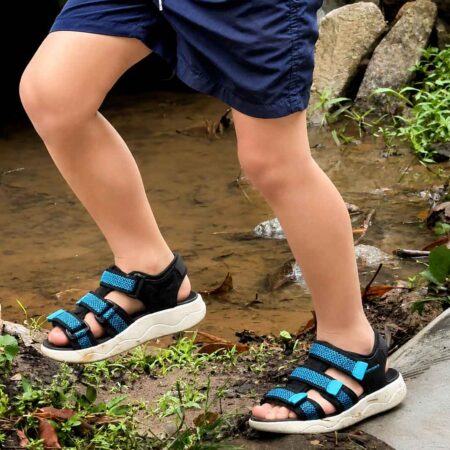
The kids’ range includes pre-made orthotic insoles for flat feet and over-pronation, sport-focused full-length insoles for high-impact activities, and sandals with built-in arch support for summer wear. Orthotics can guide proper foot development in children when used consistently with supportive footwear.
Footlogics products are made from medical-grade materials, backed by a day money-back guarantee, and ship fast across Canada, from our Toronto warehouse.
Quick use-case guide:
-
Flat feet or over-pronation → Kids ¾-length or full-length insoles
-
Heel pain or Sever’s disease → Full-length with heel cushioning
-
High-impact sport → Full-length insoles for sports
-
Casual summer wear → Arch-support sandals
Fitting, wearing and caring for kids orthotics
Fitting children’s orthotics is straightforward. Remove the existing shoe liner, place the orthotic flat inside the shoe, and check that the heel sits snugly in the heel cup with enough room at the toes. If the insole is trim-to-fit, use the original liner as a cutting guide.
Break-in schedule: Start with 1–2 hours on day one, adding an hour each day over roughly a week. Most children adapt within 5–7 days. Signs of a good fit include less fatigue after walking, reduced heel pain or knee pain, and a child who stops asking to remove their shoes.
Care tips:
-
Air-dry insoles after use; avoid machine washing or high heat
-
Wipe with a damp cloth if needed
-
Check regularly for compression, cracking, or flattening under the arch and heel
Replace insoles when visible wear appears, when the child’s individual foot has grown past the heel cup, or when toes reach the front edge. Orthotics support proper foot development in children only when they fit correctly, so staying on top of sizing is essential.
When to seek professional assessment or custom orthotics
While many children do well with pre-made medical-grade insoles, some situations call for specialist assessment. Seek professional review if your child experiences:
-
Severe or persistent pain that doesn’t improve with insoles and rest
-
Limping or favouring one leg
-
Rigid flat foot (arch absent even on tiptoes)
-
Significant asymmetry between feet
-
Toe-walking that doesn’t resolve
-
Suspected neurological conditions affecting the lower leg
Podiatrists, paediatric orthopaedic surgeons, and physiotherapists each play a role in assessing a child’s gait, foot and ankle alignment, and overall lower limb function. Physical therapy may complement orthotic use through stretching and strengthening programs.
Custom orthotics are molded from a child’s foot for specific biomechanical issues such as complex high arches, major leg-length differences, or chronic conditions. They represent specialized devices that go beyond what over-the-counter inserts can address. However, wearing custom foot orthotics is not always necessary-many children benefit from using Footlogics insoles as part of a broader plan that includes stretching, footwear changes, and activity modification.
Bring your child’s current shoes and insoles to appointments so clinicians can assess wear patterns and existing support.
Frequently asked questions about children’s orthotics and insoles
Here are answers to the most frequently asked questions parents ask about kids orthotics. For more, visit our FAQs page.
At what age can my child start wearing orthotics? Most children can begin wearing orthotics from age 3–4, once walking is stable and gait has matured. Before that age, flat feet are almost universal and intervention is rarely recommended unless a health care professional identifies a specific concern.
Will orthotics fix my child’s flat feet permanently? Orthotics support natural development and reduce pain, but there is no guarantee of permanent structural correction, especially in very young children. Most children experience improved comfort and function while wearing them.
How long do kids orthotics last? Orthotic insoles for children typically last 12–18 months. Children’s orthotics can be replaced every 12 to 18 months, but always check fit every 6–12 months because small feet grow quickly.
Are custom orthotics better than over-the-counter insoles? It depends. Pediatric over-the-counter inserts provide a first-line approach for mild discomfort and flexible flat feet. Custom foot orthotics offer more targeted correction for complex issues but cost significantly more. Podiatrists generally recommend trying prefabricated options first.
Can orthotics make my child’s feet weaker? No. When used alongside normal activity, orthotics do not weaken foot muscles. They reduce pain and improve alignment, which often allows a child to be more active, strengthening muscles naturally. Orthotics should not prevent natural muscle development in growing children.
How do orthotics help with Sever’s disease? They cushion the heel, reduce impact forces on the growth plate, and support the arch to lessen the pull of the Achilles tendon. In a 2021 trial, children with Sever’s disease who wore custom-made foot orthoses for 12 weeks reported much greater pain relief than children who used heel lifts.
How can I tell if my child has high arches? Look for a very pronounced arch that doesn’t flatten at all when standing, pressure calluses on the ball of the foot or outer heel edge, and complaints of foot or ankle instability. High arches need extra cushioning and lateral stability rather than arch-lifting support.
What shoes work best with children’s orthotics? Choose shoes with removable insoles, a firm heel counter, adequate depth, and a stable midsole. Avoid very shallow shoes or tight toe boxes. Good sports shoes paired with orthotics deliver the best benefit for active kids.
Next steps: supporting your child’s feet with Footlogics
The key message is simple: well-chosen kids orthotics can reduce pain, support flat feet and high arches, and keep children confident and active. Orthotics can guide proper foot development when paired with supportive footwear and regular physical activity.
Start by observing your child’s feet and gait. If you notice flat feet with pain, heel pain after sport, or repeated fatigue after short walks, it may be time to act. Explore Footlogics’ range of children’s orthotic insoles and sandals online, with fast delivery across Canada and a 30-day money-back guarantee if you are not satisfied.
You don’t have to wait for severe pain before supporting your child’s well being. Combining good footwear, appropriate orthotics, and an active lifestyle promotes healthy arches and alignment as your child grows. A simple, well-designed insole can make a noticeable difference to comfort, posture, and confidence-helping your child move the way kids should.
References:
- Novák J, Novák J, Vážná A, Sedlak P. Development of the medial longitudinal arch of the foot in Czech pre- and primary school children: a cross-sectional and longitudinal approach. Children. 2025;12:1407. doi:10.3390/children12101407
- Would foot arch development in children characterize a body maturation process? A prospective longitudinal study. Biomedical Journal. 2022. PubMed
- Pfeiffer M, Kotz R, Ledl T, et al. Prevalence of flat foot in preschool-aged children. Pediatrics. 2006;118:634–639. PubMed
- Liu C, Zhang H, Li J, Li S, Li G, Jiang X. The effects of foot orthoses on radiological parameters and pain in children with flexible flat feet: a systematic review and meta-analysis. Frontiers in Pediatrics. 2024;12:1388248. doi:10.3389/fped.2024.1388248
- Dars S, et al. When, why and how foot orthoses (FOs) should be prescribed for children with flexible pes planus: a Delphi survey of podiatrists. PeerJ. 2018;6:e4667. doi:10.7717/peerj.4667
- Alfaro-Santafé J, Gómez-Bernal A, Lanuza-Cerzócimo C, Alfaro-Santafé JV, Pérez-Morcillo A, Almenar-Arasanz AJ. Effectiveness of custom-made foot orthoses vs. heel-lifts in children with calcaneal apophysitis (Sever’s disease): a CONSORT-compliant randomized trial. Children. 2021;8(11):963. doi:10.3390/children8110963
