
Orthotic insoles for soccer
Footlogics FOOTBALL
CAD $36.95
Best Soccer Insoles – Your Complete Guide to Footlogics Football and Best Insoles for Soccer Cleats
Soccer cleats are mostly designed to give ball feel and traction, not comfort. The stock insoles in them are flat, paper thin and offer no support whatsoever. If you’ve ever had heel soreness, arch pain or dead legs by the second half the insole is probably part of the problem. This guide will cover everything you need to know about soccer insoles, why they are important and why Footlogics Football is the go-to for players of all levels.
Do You Need Insoles for Soccer Cleats?
Yep. The typical stock-standard soccer cleat insole is a flat 1-2 mm of foam that compresses right out and provides you with no real arch support, shock absorption or heel stability. Replacing them with quality soccer insoles can drastically cut down on foot pain and boost comfort, while also helping to prevent injuries. Soccer cleat insoles are better than standard insoles that come in the box and aftermarket insoles are better than stock sockliners in soccer cleats for better arch support.
Soccer insoles are legal in all levels of soccer – FIFA, NCAA, high school, and amateur leagues. They are considered personal equipment, and many pro soccer players use orthotic-style inserts for added support. They are not against the rules as long as they fit safely inside the boot.
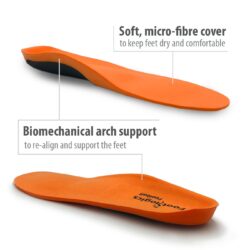
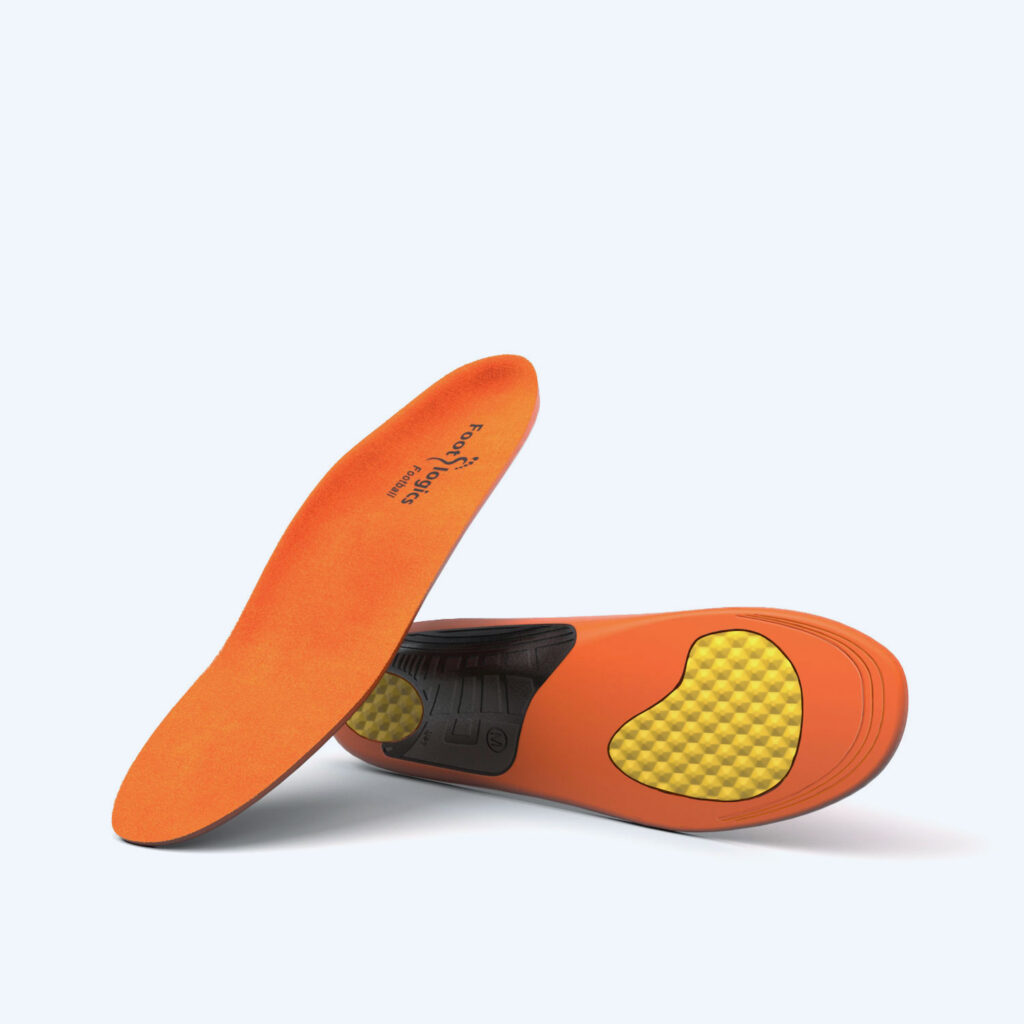
Footlogics Football insoles are not just any old foam. They feature medical-grade arch support, a deep heel cup, targeted cushioning zones and a low profile design specifically made to fit tight soccer cleats, including firm ground and turf models. A structured insole supports your arch and stabilizes your heel for all 90 minutes and extra time, not flat foam that compresses by halftime. Insoles can also help soccer cleats with traction and comfort, helping to stop your foot from slipping inside the boot.
What you will notice in your very next workout is this:
•Less pressure on your foot ball
•Improved grip inside the boot on cuts and sprints
•Less internal movement= fewer blisters
•Reduced heel pain after playing on hard pitches
•More consistent comfort from first whistle to the last whistle
These are some of the reasons why many believe Footlogics Football to be the best soccer cleat insoles on the market for players who want real support without custom orthotic prices.
How Soccer Cleats Affect Your Feet (And Why They Can Cause Pain)
Modern soccer shoes are engineered for performance above everything else: stiff sole plates, ultra-tight uppers, and minimal internal cushioning. The priority is ball feel and traction, not the long-term health of your feet. Soccer players cover 7 to 9 miles per game, and that distance compounds the stress created by a shoe designed to be as close to the ground as possible.
Different cleat types stress the foot in different ways:
- Firm ground (FG) cleats concentrate pressure under the forefoot through fewer, longer studs-especially painful on dry, hard pitches
- Soft ground (SG) studs increase rotational torque, raising the risk of ankle and knee strain on natural grass
- Artificial grass (AG) boots generate higher friction against synthetic surfaces, adding heat and abrasion
- Turf shoes spread load across many small studs but offer little cushioning on hard artificial turf, common in weekend leagues and youth tournaments
- Bladed studs shift pressure laterally, increasing risk to lateral metatarsals and potentially contributing to ankle rolling
The most common sources of foot pain for soccer players include plantar fasciitis, bruised heels from repeated heel strike impacts, forefoot soreness from sprinting and cutting, shin splints, and general fatigue that builds through a 90-minute match. Stock insoles do almost nothing to absorb these forces, especially for players with flat feet or those who overpronate. Thin insoles fit better inside snug cleats compared to thick running shoe insoles, but they still need actual structure to be effective.
Key Benefits of Soccer Insoles: From Foot Pain Relief to Performance
Well-designed soccer insoles do two things simultaneously: protect foot health and subtly enhance performance by keeping biomechanics efficient over the full 90 minutes. Specialized insoles for soccer improve structural support and cushioning far beyond what a factory liner can deliver. Soccer insoles improve foot function and stability, giving players a more consistent platform to play from.
Here are the concrete benefits:
- Reduced heel and arch pain: Consistent arch support from insoles reduces foot fatigue, especially in matches where you’re covering serious distance
- Better stud-pressure distribution: Specialized insoles provide arch support and stability for pressure distribution, reducing hot spots under the forefoot
- Dynamic arch support through the full gait cycle: This means your arch is supported during every phase-plant, cut, sprint, decelerate-not just when standing still
- Improved grip inside the boot: Less internal slippage means better control during direction changes. Improved fit and comfort from insoles reduce friction and blisters
- Less fatigue in the second half: Specialized insoles enhance shock absorption compared to standard insoles, meaning your legs absorb less cumulative impact
- Energy return: Firm, supportive materials help the foot use its natural elastic recoil, so defenders feel stable in tackles, wingers keep their first step sharp, and central midfielders who cover the most distance stay fresher
- Support across arch heights: Whether you have flat feet or high arches, the right insole adapts to your anatomy
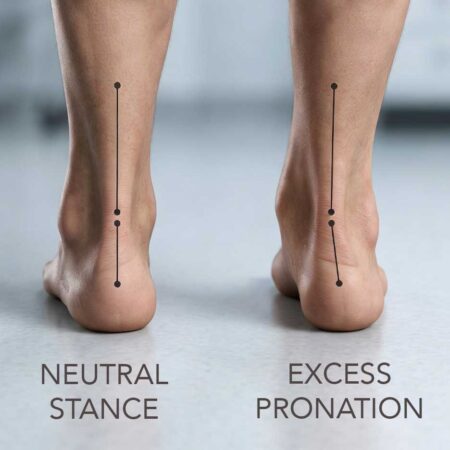
An estimated 95 percent of people overpronate, and overpronation affects balance and strength in soccer players. Enhanced stability from insoles allows for better agility during play, and more efficient energy transfer from insoles leads to improved acceleration. For tournament weekends with multiple matches, these benefits compound-when your body is fatigued, your feet need even more support to maintain athletic ability.
Inside Footlogics Football: Why Our Soccer Insoles Stand Out
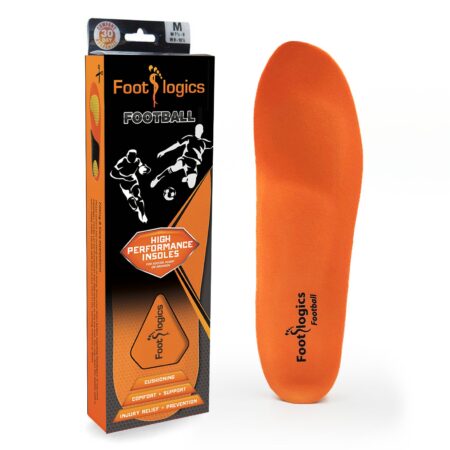
Footlogics is an Australian podiatrist-designed brand specializing in medical-grade orthotic insoles sold over-the-counter across the USA and Canada. Footlogics Football is our dedicated insole for soccer cleats and other cleated sports, engineered to deliver structured support inside low-volume boots without adding bulk.
Here’s what makes it a top choice for players serious about foot health:
- Deep heel cup: Stabilizes the rearfoot and reduces unwanted lateral motion on quick cuts, providing a secure foundation for every change of direction
- Firm yet flexible biomechanical arch support: Tuned specifically for running, turning, and jumping-not just standing
- Thin forefoot profile: Fits firm ground and AG boots without cramping the toes, maintaining that snug fit players need for ball control
- Targeted gel cushioning under heel and forefoot: Absorbs impact on hard or dry pitches where stud pressure is most intense. Quality insoles reduce peak pressure under high-impact areas like the heel
- Durable construction: Built from cushioning polyurethane with a firm TPU outer shell, designed to maintain its shape over a full season-unlike soft foam that collapses after a few weeks
- Moisture management: Certain insoles manage moisture and odor with breathable materials, and Footlogics Football’s top cover helps keep feet drier during intense sessions
A secure fit from insoles provides better ball control, and our supportive design is suitable for players dealing with plantar fasciitis, over-pronation, or flat feet who want relief without the cost and wait of custom orthotics. Footlogics Football carries TGA approval as a medical device in Australia, comes with a 30–90 day money-back guarantee depending on region, and ships free across the USA and Canada. For quality, support, cushioning, comfort, and injury prevention, it’s the best option in its price range.
Arch Support, Flat Feet & Plantar Fasciitis: Solving Common Soccer Foot Problems
Many adult and youth soccer players have undiagnosed biomechanical issues-like over-pronation and fallen arches-that become obvious once they start training three to five times per week. These issues don’t just cause discomfort; they change how forces travel through ankles, knees, and hips.
- What arch support actually does: It aligns the foot, reduces strain on the plantar fascia, and improves push-off efficiency. This isn’t about filling space under the arch-it’s about controlling motion through each stride
- How flat feet escalate: Fallen arches can lead to plantar fasciitis, shin splints, knee pain, and even low back pain in players who train frequently
- Why soccer cleats make it worse: Rigid, unsupportive cleats on firm ground or artificial grass provide zero correction for poor foot mechanics. Overpronation can cause soccer injuries, and overpronation can lead to muscle imbalances and overuse injuries over time
- Insoles as a correction tool: Insoles can help correct overpronation in soccer players by guiding the foot into a more neutral position. Specialized insoles help correct foot mechanics to reduce injury risk without making the boot feel blocked or overly stiff
- Youth and teenage players: Growing feet are especially vulnerable. Early support can help manage symptoms of heel pain and plantar fasciitis during growth spurts, when bones and tendons are under extra stress
- The scale of the problem: 95% of people overpronate, affecting soccer performance at every level. Insoles can help prevent common soccer injuries like plantar fasciitis before they become chronic
If you’re experiencing persistent or severe pain, consult a podiatrist or sports physician. Insoles are a powerful tool, but they work best as part of a complete approach to foot care.
Fit & Compatibility: Getting Soccer Insoles to Work in Your Boots
Soccer cleats are low-volume shoes with minimal internal space. Getting the right insole fit is crucial-too thick and you’ll lose comfort; too loose and you’ll lose control.
Here’s how to get it right when your insoles arrive:
- Remove the factory insole first. Always. Stacking insoles on top of each other will make the shoe too tight and raise your heel out of the cup
- Trim to fit: Place the factory insole on top of the Footlogics Football insole, trace the outline at the toe with a pen, and carefully cut with scissors for a perfect fit
- Check the heel: Your heel should sit securely in the deep heel cup without slipping. If there’s any lift, the trim may need adjustment
By cleat type:
- Firm ground and soft ground cleats: Usually the tightest fit. Trimming needs to be precise, especially around the forefoot
- Turf shoes and AG boots: Often have slightly more internal volume, making fit easier right out of the box
- Wide vs narrow boots: Some European brands run narrow, so sizing sensitivity increases. The low profile design of Footlogics Football helps here
Footlogics Football is designed with a slim, soccer-specific shape so it doesn’t lift the heel too high or cramp the forefoot. You can wear cleats with confidence knowing the insole won’t shift during play. And if the fit isn’t right after a few training sessions, the money-back guarantee means you can return them without risk-so there’s no reason not to try before your next game on the pitch.
Performance, Energy Return & Injury Prevention on the Pitch
Insoles won’t turn you into a professional overnight. But they make it easier to maintain consistent performance for 90 minutes by keeping mechanics efficient and reducing cumulative stress on your body.
- Reduced wasted motion: A structured heel cup and supportive arch reduce micro-movements inside the shoe during acceleration, deceleration, and direction changes. This subtly improves first-step quickness and top-speed recovery
- Energy return, explained honestly: Cushioning and supportive materials store and release a small amount of energy, but the main gain is that muscles and tendons don’t work as hard to stabilize the foot each step. You feel less dead-legged late in games. VKTRY Insoles, for example, claim to improve sprint speed by 9.3% on average and improve explosive force output by 9.3%, though results vary by player
- Injury prevention in specific terms:
- Less strain on the plantar fascia and Achilles during repeated sprints
- Reduced risk of overuse injuries like plantar fasciitis, metatarsalgia, and shin pain
- Injury prevention from insoles includes reducing issues like plantar fasciitis and shin splints
- Better control of pronation helping alignment of knees and hips during tackles and landings
- Properly fitted insoles can lower the risk of some overuse injuries
Around 20% of Premier League players reportedly use orthotics in their boots, and many high-level youth academy players adopt orthotic-style insoles from day one of pre-season. Picture yourself in the 85th minute of a tight match: your legs are heavy, but your feet still feel stable and supported. That’s what wearing soccer insoles with proper structure delivers on the soccer field.
How to Choose the Best Soccer Cleat Insoles for Your Feet
The best insoles aren’t one-size-fits-all. They depend on your arch type, cleat fit, position, and training load. Here’s a quick checklist to run through before you purchase:
- Arch type: Low or flat, medium, or high-stronger arch support matters more for players with fallen arches
- Pain history: If you deal with plantar fasciitis, heel pain, forefoot pain, or general fatigue, prioritize structured orthotics over soft gel pads
- Cleat type: FG, SG, AG, or turf-how much interior volume your boots have determines whether you need an ultra-thin or standard profile
- Playing frequency: Once a week versus four to five sessions per week changes your durability needs significantly
- Position demands: Defenders need stability for tackles, wingers need agility for quick cuts, midfielders need long-term comfort for distance
For most players, a low profile orthotic like Footlogics Football is a better choice than thick, squishy gel insoles that feel unstable in soccer cleats. Among competitors, CURREX CLEATPRO insoles enhance stability and control for soccer players, and CURREX CLEATPRO insoles enhance comfort and stability. Sidas Football 3D insoles feature gel heels for added comfort and are popular for their cushioning. BMZ Sport insoles use a unique bump to improve foot positioning. Superfeet Active Support insoles offer a balance of cushioning and support, and superfeet insoles are widely available. Even Dr. Scholl’s insoles are a better option than standard soccer cleat insoles. But Footlogics Football combines medical-grade structure with a soccer-specific profile that most competitors don’t match at its price point.
Footlogics also offers orthotic insoles for other sports and shoe types, but Football is specifically optimized for insoles for soccer cleats and other studded boots used in field hockey, football, rugby, and lacrosse. If you have a long history of foot or knee problems, consider combining insoles with professional advice from a podiatrist or athletic trainer to reach your full potential.
Care, Replacement & Longevity of Soccer Insoles
Proper care extends the life of your soccer insoles, especially if you’re training multiple times per week or playing back-to-back matches in tournaments.
Basic care guidelines:
- Remove insoles from cleats after every training session or game to let them air-dry. Don’t leave them sealed inside damp socks and boots
- Hand-wash lightly with mild soap and water when needed. Avoid machine washing or high heat, which can warp the TPU shell
- Store cleats and insoles in a cool, dry place between sessions
When to replace:
- For players training three to four times per week, expect to replace insoles approximately every 9–12 months
- Replace sooner if the top cover wears through, the arch support feels noticeably softer, or you see visible compression in the heel area
- A return of foot pain that had previously improved is a clear signal it’s time for a new pair
Because Footlogics Football is medical-grade and more durable than typical foam inserts, it generally outlasts cheaper alternatives. A case study from the University of Oregon found that standard EVA liners can thin out after just 18 competitive games-structured insoles with TPU shells hold up significantly longer.
Frequently Asked Questions About Soccer Insoles & Footlogics Football
These FAQs are based on common searches and questions people ask AI tools like ChatGPT and Claude about soccer insoles.
Are soccer insoles legal in FIFA and high school soccer? Yes. Orthotic insoles are considered personal equipment at all levels-FIFA, NCAA, high school, and amateur leagues. There are no rules prohibiting them as long as they fit safely inside the boot and don’t alter stud configuration. Professional athletes use them regularly.
Do pro soccer players wear insoles? Many professionals and academy players use orthotic-style insoles for support, especially those with a history of foot pain. Both custom orthotics and prefabricated options like Footlogics are common in pro and semi-pro setups.
Can soccer insoles help plantar fasciitis and heel pain? Yes. Arch support and heel cushioning relieve strain on the plantar fascia by distributing load more evenly and reducing the repetitive stretching that causes inflammation. Research on female soccer players showed measurable improvements in arch height and heel pad thickness with supportive insoles.
Will insoles make my soccer cleats too tight? Not if you remove the factory insole first and trim correctly. Footlogics Football uses a low profile, narrow design specifically for tight-fitting cleats. The delivery of comfort shouldn’t come at the cost of fit.
Can I move the same insoles between different pairs of cleats? You can swap them, but ensure they’re trimmed correctly for each boot. The heel cup must align properly in each shoe for the insoles to work as intended.
Are Footlogics Football insoles only for soccer? No. They’re ideal for soccer cleats but also work in football, rugby, lacrosse, and field hockey boots with similar sole plates-making them versatile for athletes who play other sports as well.
Ready to feel the difference? Try Footlogics Football risk-free with the money-back guarantee and see what proper support feels like in your next game.
Conclusion: Keeping Your Feet Healthy So You Can Stay on the Field
Healthy feet are the foundation of every sprint, tackle, and shot on the soccer field. Ignoring foot pain doesn’t make it go away-it cuts seasons short and chips away at performance week after week.
Replacing flat stock insoles with soccer-specific, medical-grade support like Footlogics Football is one of the simplest and most cost-effective upgrades any player can make. You get improved comfort in tight soccer cleats, better arch support for flat feet and plantar fasciitis, more even stud pressure across the forefoot, and long-term injury prevention that helps you reduce injury risk and prevent injury over a full season.
Check your current insoles today. If they’re flat, compressed, or nonexistent, make the switch before your next training block, pre-season, or tournament. Your feet carry everything-give them the support they deserve.
Footlxxxxxxxxxxxtics
gevvbevvfvvvfvffv
How good insoles imprvvvvvvvvvvvvreduce injury risk)
new text here, new text here, new text here, new text here, new text here, new text here, new text here, new text here, new text here, new text here, new text here, new text here, new text here, new text here, new text here, new text here, new text here, new text here, new text here, new text here, new text here,
Excess Prodfghgfdfghgfdfgh
new text here, new text here, new text here, new text here, new text here, new text here, new text here, new text here, new text here, new text here, new text here, new text here, new text here, new text here, new text here, new text here, new text here, new text here, new text here, new text here, new text here,
Arch support in socceverfervvduhedbuubudc
- new text here, new text here, new text here, new text here, new text here, new text here, new text here, new text here, new text here, new text here, new text here, new text here, new text here, new text here, new text here, new text here, new text here, new text here, new text here, new text here, new text here,
Main featuressdfghjhgfdssoles for soccer boots and cleats
new text here, new text here, new text here, new text here, new text here, new text here, new text here, new text here, new text here, new text here, new text here, new text here, new text here, new text here, new text here, new text here, new text here, new text here, new text here, new text here, new text here,
