
Metatarsal pads
Metatarsal Pads: where they go, why they slip and a better option
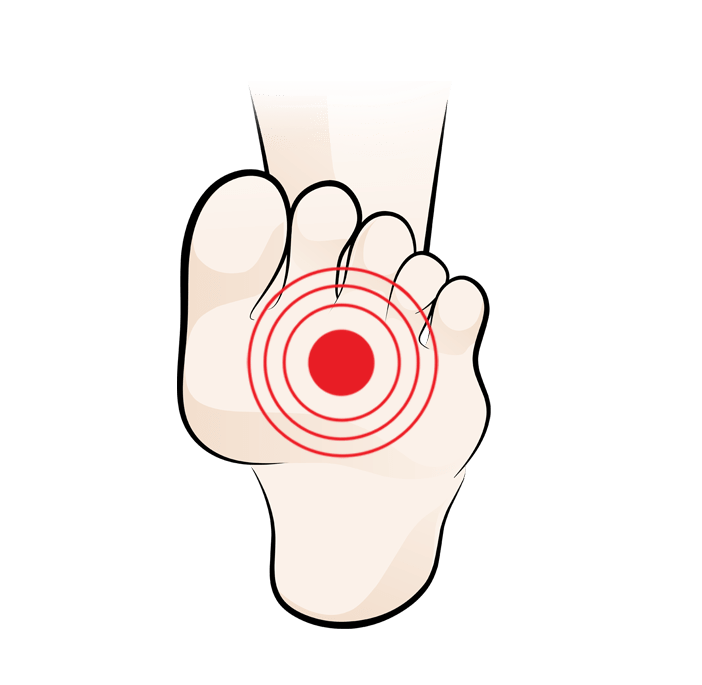
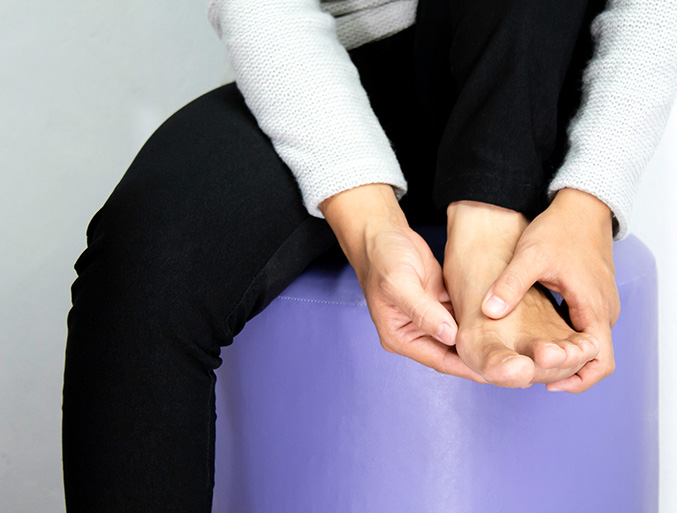
A metatarsal pad can ease ball-of-foot pain, but only when it sits in exactly the right spot: just behind the ball of the foot, not under it. Research shows that a pad placed even a few millimetres too far forward can increase pressure instead of reducing it. Loose pads also tend to shift as you walk, and a pad on its own doesn’t support the rest of your foot.
This guide explains where a metatarsal pad should go and why so many people find stick-on pads disappointing. It also explains why an insole with a metatarsal pad built in is the more reliable choice.
What a metatarsal pad does
The ball of your foot sits over the heads of five long bones, the metatarsals. When those heads take too much load, the result is the burning, bruised feeling of metatarsalgia. A metatarsal pad is a small dome that supports the shafts of those bones just behind their heads. This area of the forefoot is often called the transverse or metatarsal arch. Lifting it slightly lets the bones share the load, which takes pressure off the joints underneath.
That’s why position is everything. The pad has to push up on the bones behind the painful spot. Placed under the painful spot itself, it simply adds another bump to stand on.
Problem 1: Most loose pads end up in the wrong place
Studies that measured pressure under the foot show how small the target is:
- Too far forward makes pain worse. A study of 20 people found that a pad cut peak pressure under the forefoot by an average of 32% when it sat 6 to 11 mm behind the metatarsal heads (Hastings et al., 2007). When the pad sat more than about 2 mm past the heads, under the ball of the foot, pressure went up, not down. Participants had diabetes and nerve damage, but the mechanics of the forefoot are the same.
- Too far back does nothing. In a separate study of ten people with metatarsalgia, a pad placed just behind the point of highest pressure lowered it by about 37%. The same pad moved further back towards the arch made no significant difference (Hsi, Kang and Lee, 2005).
That leaves a window only about half a centimetre wide, and it sits on bones you can’t see once your foot is inside a shoe. Most people stick the pad where it hurts, directly under the ball of the foot, which is exactly where it can make things worse.
Problem 2: Even a well-placed pad won't stay put
Suppose you do get a loose pad into the right spot. In our experience, it rarely stays there. With every step, your foot slides slightly forward and back inside the shoe, and that motion works on the pad thousands of times a day. Heat and sweat weaken the adhesive, and a pad stuck to a removable footbed shifts whenever the footbed is taken out or slides around.
The result is a pad that drifts a few millimetres forward or backward over days or weeks. Given how narrow the target window is, a few millimetres is enough to undo the benefit. If the drift is forward, onto the ball of the foot, the pad can start adding to the problem.
Problem 3: A pad alone doesn't support the rest of your foot
Ball-of-foot pain often starts further back in the foot. When the foot rolls inward excessively as you walk (over-pronation), the arch flattens and the first metatarsal, behind the big toe, is thought to become less stable. Studies of people with pain under the middle metatarsals have found less load than normal under the big-toe joint. That means the second and third metatarsals carry more than their share (reviewed by Richie, 2022).
Research hasn’t yet shown that over-pronation directly causes metatarsalgia. But a metatarsal pad on its own does nothing for the arch or the heel, so it can’t help if foot posture is part of the problem. A contoured insole can. In a study of 31 people with metatarsalgia, a custom-moulded insole cut peak pressure under the central forefoot by about 18% (Postema et al., 1998).
Problem 4: A pad alone won't give provide much needed cushioning under the ball of the foot!
Because a metatarsal pad has to sit behind the ball of the foot, it does nothing to cushion the ball of the foot itself. With each step, the metatarsal heads still land on whatever is underneath them, which is often a thin factory liner. For sore, bruised-feeling joints, that’s a lot of impact with no protection.
Footlogics insoles combine the metatarsal raise with shock-absorbing padding under the forefoot, so the ball of the foot is lifted and cushioned at the same time. Footlogics Meta Premium has the most cushioning in the range, with 14 mm of polyurethane (PU) and gel.
The better option: an insole with the metatarsal pad built in
Footlogics builds the metatarsal raise into the insole itself, so it solves all three problems.
- It’s in the right place from the start. The raise is moulded into the insole behind the ball of the foot. Choosing the right size lines it up with your metatarsals, with no guesswork and no trial and error.
- It can’t drift. The raise is part of the insole, not stuck onto it, so it can’t creep forward or backward. It stays exactly where it was designed to sit for the life of the insole.
- It supports the whole foot. Arch support and a deep heel cup help control excess inward rolling, while the metatarsal raise takes pressure off the ball of the foot.
- It moves with you. Swap the insole between shoes, with no re-sticking and no repositioning.
Relief tends to follow the drop in pressure. In a small study of people with metatarsalgia, the feet whose forefoot pressure fell most after a met pad was fitted reported the biggest improvement in pain (Kang et al., 2006).
Loose metatarsal pad vs insole with a built-in pad
| Loose or stick-on pad | Footlogics insole with built-in metatarsal raise | |
| Position | You place it by hand and have to get it within a few millimetres | Moulded into the insole behind the ball of the foot |
| Stays in place | Tends to drift as you walk and as the adhesive weakens | Can’t move; it’s part of the insole |
| Arch support | None | Yes |
| Heel stability | None | Deep heel cup |
| Cushioning under the ball of the foot | None; the pad sits behind it | Shock-absorbing forefoot padding, with 14 mm of PU and gel in Meta Premium |
| Moving between shoes | Usually one pad per shoe | Lift out and move the insole |
| Risk of making pain worse | Yes, if it sits under the ball of the foot | Raise sits behind the ball of the foot by design |
Which Footlogics insole has a built-in metatarsal pad?
- Footlogics Meta Premium [link]: our most cushioned insole for ball-of-foot pain, with 14 mm of PU and gel cushioning.
- Footlogics Metatarsalgia: a 3/4-length insole for slip-ons, loafers, flats and flat sandals.
- Footlogics Meta Full-length: a full-length insole for lace-ups, runners and boots.
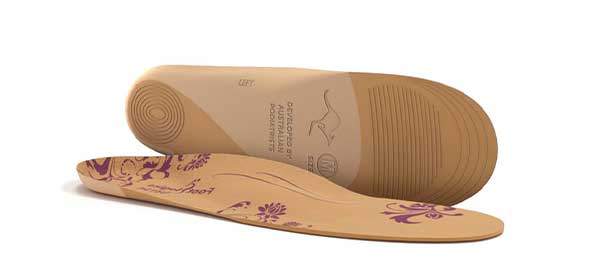
- Footlogics Versa: a slim insole for women’s flats and shoes with low-to-medium heels.
- Footlogics Football: for soccer cleats and hockey skates.
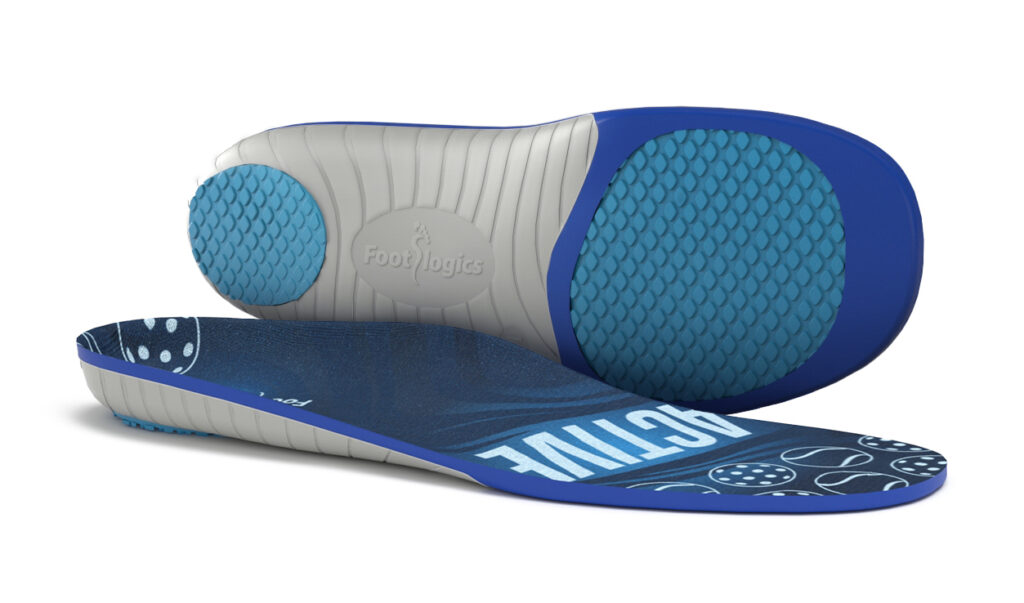
- Footlogics Sports: for running, hiking and the gym.
Try them risk-free
Every pair of Footlogics insoles comes with a 30-day money-back guarantee. Wear them as directed, and if they don’t ease your ball-of-foot pain, contact us within 30 days for a full refund. If you’re not sure whether a built-in metatarsal pad is right for you, there’s no risk in finding out.
Shop Footlogics Metatarsalgia insoles
Frequently asked questions regarding Metatarsal Pads:
Where exactly should a metatarsal pad go?
Just behind the ball of the foot, not under it. Feel for the row of bony bumps at the base of your toes: those are the metatarsal heads. The highest point of the pad should sit roughly 1 cm behind them, towards your arch. One study found consistent pressure relief when the pad sat 6 to 11 mm behind the metatarsal heads.
Can a metatarsal pad make my pain worse?
Yes, if it’s in the wrong place. A pad that sits under the ball of the foot adds pressure to the joints that are already sore; one study measured higher pressure once the pad sat just 2 mm past the metatarsal heads. If a pad feels like standing on a marble, it’s almost certainly too far forward. An insole with a built-in raise avoids this, because the raise is positioned behind the ball of the foot by design.
Can I add a metatarsal pad to the orthotics I already have?
You can, but the same problems apply: you have to place it precisely, and it can shift over time. It also adds height in the forefoot, which can crowd the toes in snug shoes. If your current insoles don’t include metatarsal support, an insole with a built-in raise is usually the simpler fix.
How soon will I notice a difference?
Many people feel less pressure under the ball of the foot within the first few days. Allow a week or two for your feet to adjust to a new insole, starting with a few hours a day and building up to full-time wear. If your pain hasn’t improved after a few weeks, see a podiatrist, chiropodist or physiotherapist.
Do metatarsal pads help Morton’s neuroma?
They often do. A metatarsal pad placed behind the painful area can ease pressure on the irritated nerve between the metatarsal bones. The same rules apply: it has to sit behind the painful spot, not under it. If numbness or tingling in your toes is your main symptom, have it assessed by a foot specialist.
What if a Footlogics insole doesn’t work for me?
Every pair comes with a 30-day money-back guarantee. Wear your insoles as directed, and if they haven’t helped within 30 days, contact us for a full refund.
References
- Hastings MK, Mueller MJ, Pilgram TK, Lott DJ, Commean PK, Johnson JE. Effect of metatarsal pad placement on plantar pressure in people with diabetes mellitus and peripheral neuropathy. Foot & Ankle International. 2007;28(1):84–88. doi:10.3113/FAI.2007.0015
- Hsi WL, Kang JH, Lee XX. Optimum position of metatarsal pad in metatarsalgia for pressure relief. American Journal of Physical Medicine & Rehabilitation. 2005;84(7):514–520. Abstract
- Kang JH, Chen MD, Chen SC, Hsi WL. Correlations between subjective treatment responses and plantar pressure parameters of metatarsal pad treatment in metatarsalgia patients: a prospective study. BMC Musculoskeletal Disorders. 2006;7:95. doi:10.1186/1471-2474-7-95
- Postema K, Burm PET, van der Zande ME, van Limbeek J. Primary metatarsalgia: the influence of a custom moulded insole and a rockerbar on plantar pressure. Prosthetics and Orthotics International. 1998;22(1):35–44. Full text
- Richie D. Exposing the myths about metatarsalgia. Podiatry Management. September 2022:57–63. PDF
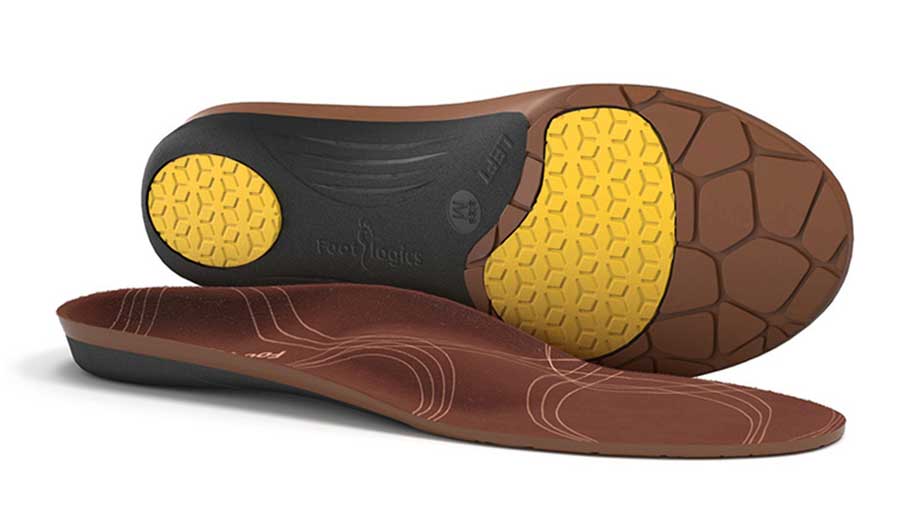
Footlogics META PREMIUM
For regular lace-up shoes, winter boots etc. Features 12mms of cushioning under the ball of the foot + firm nylon shell for added support and durability.
SHOP NOW
$44.95
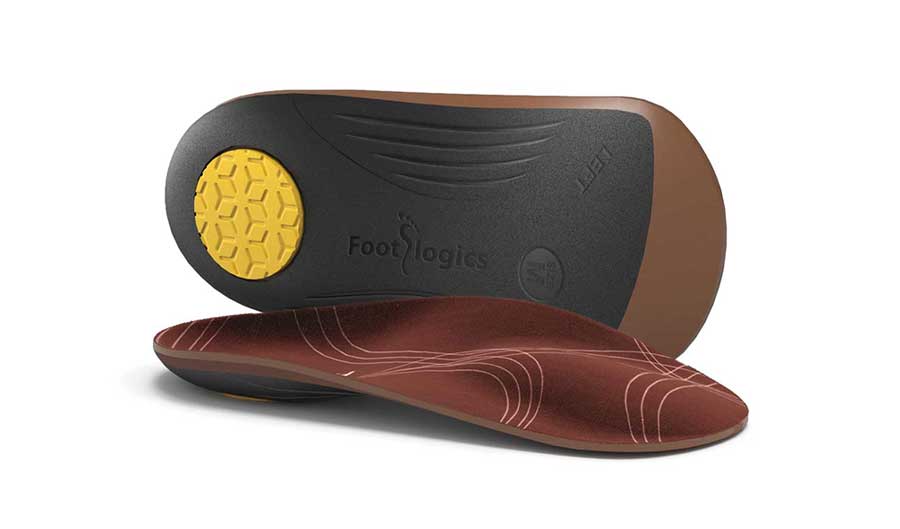
Footlogics 3/4 META PRO
3/4 length premium insole for slip-on shoes. Firm nylon shell for extra support and durability.
SHOP NOW
$39.95
WHAT MAKES FOOTLOGICS DIFFERENT?
Footlogics orthotics are designed to deliver medical-grade support and relief — without the cost or wait time of custom orthotics.

TGA-Approved Medical Device
Meets strict medical standards

Developed by Podiatrists
Created for real foot conditions, not generic comfort

Trusted by Health Professionals
Recommended by doctors and physical therapists worldwide
Over 2 Million Pairs Sold
Proven support for everyday life, work, and sport

Available in 20+ countries
Trusted by customers across the globe
Australia’s #1 Orthotic Insole
Leading podiatrist-designed support brand
