
Orthotic insoles for metatarsalgia
Foot pain affects between 13% and 36% of adults in large population studies, and pain in the Ball of the Foot is one of the most common reasons people see a doctor or foot specialist.
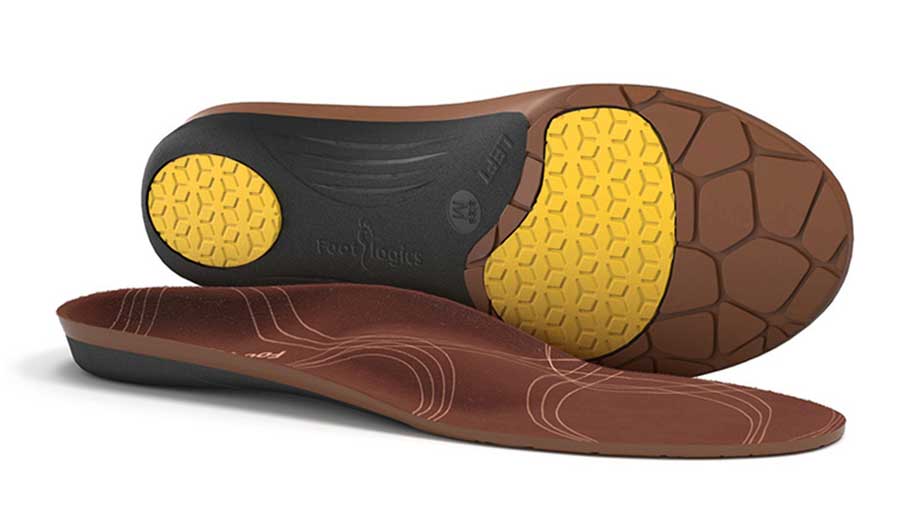
Footlogics META PREMIUM
For regular lace-up shoes, winter boots etc. Features 12mms of cushioning under the ball of the foot + firm nylon shell for added support and durability.
SHOP NOW
$44.95
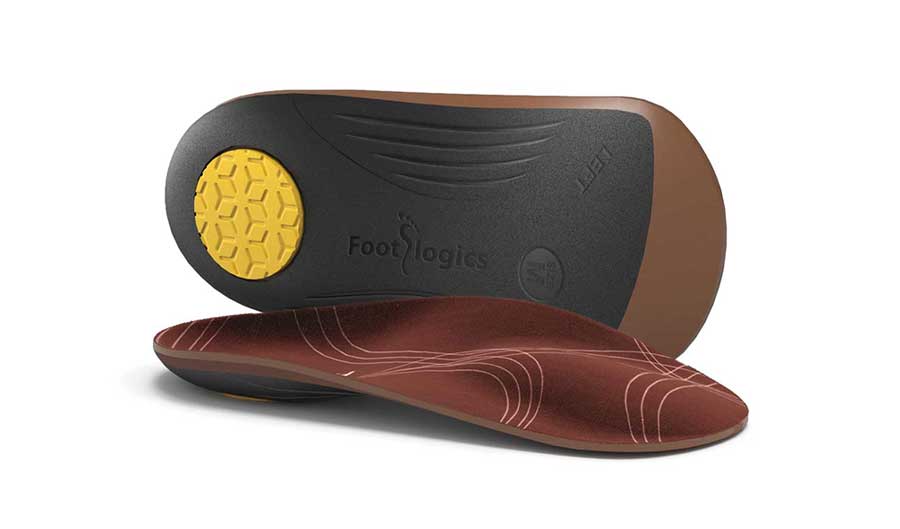
Footlogics 3/4 META PRO
3/4 length premium insole for slip-on shoes. Firm nylon shell for extra support and durability.
SHOP NOW
$39.95
Metatarsalgia Insoles & Orthotics for Ball of Foot Pain
Metatarsalgia insoles ease ball-of-foot pain by supporting the metatarsal bones just behind the sore spot. That takes pressure off the joints underneath your toes. The feature that does this is a metatarsal raise: a small, firm dome that sits just behind the ball of the foot.
Footlogics has built this metatardal support into podiatrist-designed orthotic insoles, along with arch support and a deep heel cup, so it stays in the right place with every step. Your pain may have started with dress shoes, long shifts on concrete or a spring return to running. Whichever it was, there’s a model for the shoes you wear most.
What is Metatarsalgia?
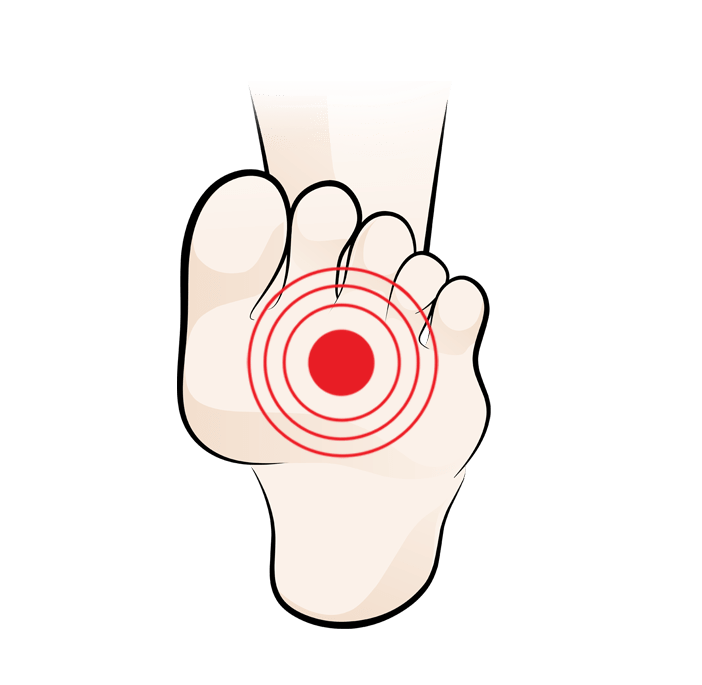
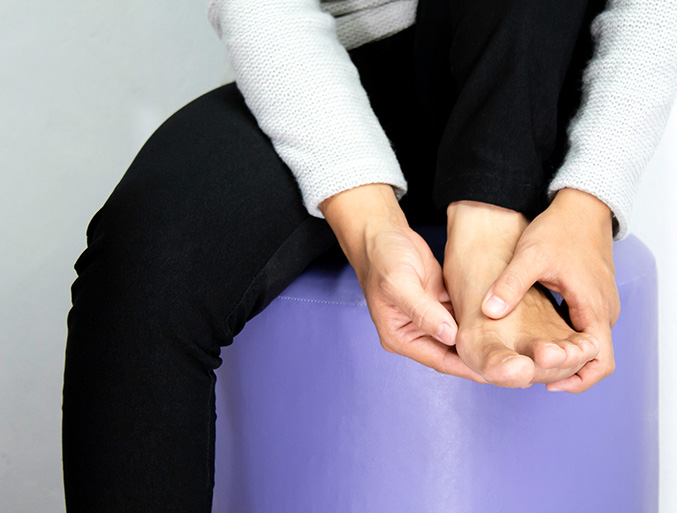
Metatarsalgia means pain under the ball of the foot, where the heads of the five metatarsal bones meet the toes. The term describes where it hurts rather than one single cause. A 2017 review in Orthopaedics & Traumatology: Surgery & Research sorts the causes into three groups (Besse, 2017):
- Primary: caused by the shape or mechanics of the foot itself.
- Secondary: caused by another condition, such as arthritis or a nerve problem.
- Iatrogenic: following foot surgery.
The cases most likely to respond to insoles are mechanical. One or more metatarsal heads, often under the second or third toe, carry more load than the tissue can handle.
Common signs
- burning, aching or sharp pain under the ball of the foot
- pain that builds while you stand, walk or run, and eases when you rest
- a feeling of walking on a pebble or a folded sock
- more pain on hard floors, especially in bare feet
- a patch of hard skin (callus) under one spot
What overloads the ball of the foot?
- Heeled shoes. In a study of ten women, switching from 2 cm heels to 6 cm heels raised peak pressure under the central forefoot by 30%. Pressure over time rose by 48% (Speksnijder et al., 2005). The higher the heel, the more weight shifts forward.
- Tight calf muscles. When your ankle can’t bend forward easily, the heel lifts off the ground early and the forefoot takes the load sooner.
- High arches. A high, rigid arch puts less of the foot in contact with the ground, so pressure concentrates under the heel and the ball of the foot.
- A thinning fat pad. The natural cushion under the metatarsal heads tends to thin with age.
- Toe and bone shape. A long second metatarsal, bunions and hammer toes can all shift extra load onto one or two joints.
- Long shifts on hard floors. Nurses, warehouse staff, retail workers and trades who stand on concrete all day are often affected.
- Sudden jumps in activity. Common triggers are returning to running in the spring, a new pickleball habit, or a walking holiday.
- Bare feet at home. Many Canadian homes are shoes-off, and walking barefoot on hardwood or tile gives the forefoot no cushioning or support.
How a metatarsal pad relieves pain: what the research shows
A metatarsal pad, or met pad, supports the bones just behind the painful joints and shifts load away from the metatarsal heads. Research suggests its position matters as much as the pad itself.
- Placement makes the difference. Researchers in Taiwan measured pressure under the feet of ten people with metatarsalgia while they walked (Hsi, Kang and Lee, 2005). A pad placed just behind the point of highest pressure cut peak pressure under the metatarsal heads by about 37%, from 678 to 427 kPa. The same pad placed further back, towards the arch, made no significant difference.
- Less pressure, less pain. A follow-up study fitted met pads to the insoles of 13 people (18 feet) and followed them for two weeks (Kang et al., 2006). Average pain fell from 4.9 to 3.9 out of 10, and 12 of the 18 feet improved, half of them by more than 50%. Three feet showed no change and three felt worse. The feet whose pressure dropped most reported the most relief, and the authors concluded that pad placement should be individualized.
Both studies were small, but they point the same way. A met pad helps most when it sits just behind the ball of the foot, and it doesn’t suit every foot. That’s why Footlogics builds the raise into a contoured insole matched to your foot length, instead of relying on where a stick-on pad happens to land. If a pad feels like a hard lump or makes the pain worse, it’s probably sitting too far forward.
Insoles are a recognized first step. The 2017 review lists insoles, stretching, footwear changes and treating calluses as first-line care, before surgery is considered (Besse, 2017).
Ball-of-foot insoles sold in Canada: comparison
| Insole | Type | Metatarsal support | Notes | Price (CAD) |
| Footlogics Metatarsalgia | 3/4 length, cushioned | Built-in metatarsal raise | Deep heel cup and arch support; for slip-ons, flats and flat sandals | $34.95 |
| Footlogics Meta Full-length | Full length, cushioned | Built-in metatarsal raise | For lace-ups, runners and boots | $37.95 |
| Footlogics Versa | Slim full length, firm shell | Supports the forefoot arch | For women’s flats and low-to-medium heels | $37.95 |
| PowerStep Pinnacle Plus Met | Full length, semi-rigid | Built-in Poron metatarsal pad | Neutral arch support, deep heel cradle | $40–$99 |
| SOLE Active Medium with Met Pad | Full length, heat-mouldable | Built-in metatarsal pad | Moulds with heat and wear; suits any arch height | $64.99–$65.00 |
| Superfeet All-Purpose Support Medium Arch | Full length, firm | None listed | Medium arch support for general use | $59.99 |
| Dr. Scholl’s Ball of Foot Metatarsal Pain Relief Pad | Adhesive forefoot pad | Raised foam pad | Sticks inside the shoe; no trimming | about $12 |
Competitor prices were checked on 19 October 2026 and vary by retailer: PowerStep at Anatech ($40.00) and CompressionCare ($99.00); SOLE at Canadian Footwear ($64.99) and VPO ($65.00); Superfeet at superfeet.ca ($59.99); Dr. Scholl’s at Well.ca ($11.76). Features are taken from each brand’s or retailer’s product description.
How to use this table:
- Pain under the ball of the foot: look for a built-in metatarsal pad or raise.
- Flat feet as well: a general arch support insole may help with the arch, but the Superfeet product page lists no metatarsal support.
- On a budget: a stick-on pad is the cheapest option. It has to be positioned precisely, though, and only works in the one pair of shoes it’s stuck into.
Metatarsalgia or Morton's neuroma?
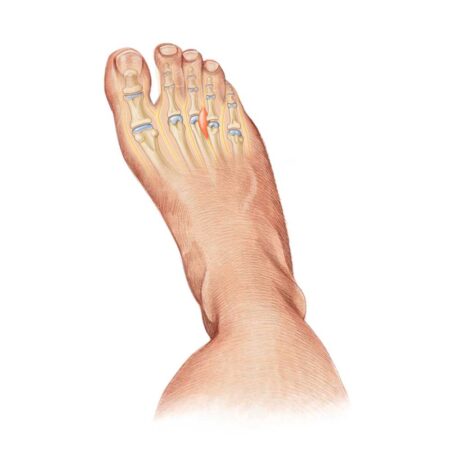
Morton’s neuroma is often mistaken for metatarsalgia because both hurt in the same part of the foot. The difference is the source. Morton’s neuroma is a thickened, irritated nerve between two metatarsal bones, most often between the third and fourth toes. As well as forefoot pain, it tends to cause burning, tingling or numbness that spreads into those toes. Some people describe it as walking on a bunched-up sock. Pedorthics Canada notes that it affects more women than men, and that tight shoes and high heels make it worse.
The two conditions share the same first steps: roomier footwear, and a metatarsal pad placed behind the painful area to take pressure off the forefoot. Footlogics Metatarsalgia, Meta Full-length and Versa all include this support. If numbness or tingling in your toes is your main symptom, have it assessed by a podiatrist, chiropodist or doctor. For more detail, read our Morton’s Neuroma guide.
Other ways to ease ball-of-foot pain
- Stretch your calves every day. Stand facing a wall with one foot back, heel down, and lean forward until you feel a stretch in the calf. Hold for 30 seconds, three times on each leg, once with the back knee straight and once slightly bent.
- Choose shoes with room and a firm, curved sole. A wide toe box stops the metatarsals being squeezed together. A stiff sole that rocks forward reduces how far the ball of the foot bends with each step.
- Keep high heels for short occasions. For a long day on your feet, choose a low heel.
- Wear supportive footwear indoors. If your home is shoes-off, a pair of house shoes with arch support, or an insole in your indoor shoes, protects your forefoot on hard floors.
- Have calluses treated professionally. A chiropodist or podiatrist can safely reduce hard skin that adds pressure. Don’t cut calluses yourself, especially if you have diabetes.
- Ease back gradually. Cut back running or court time while the pain settles, and keep fit with cycling or swimming.
When to get your feet checked
See a professional if:
- the pain hasn’t improved after a month of supportive insoles and better shoes
- your forefoot is swollen, bruised or painful to press after a jump in activity, which can signal a stress fracture
- you have numbness or tingling in your toes
- you have diabetes, poor circulation or a wound that won’t heal
In Canada, you can start with your family doctor, a podiatrist or chiropodist (depending on your province), a physiotherapist or a Canadian Certified Pedorthist.
FAQs: Metatarsalgia & Ball of Foot Pain; treatment with insoles
1. Should I use a stick-on metatarsal pad or an insole with one built in?
For most people, a built-in raise is the more reliable choice. A stick-on pad needs to sit just behind the ball of the foot, and research shows that a pad placed too far back gives little relief. Getting it right by hand takes trial and error, and the pad only works in that one pair of shoes. An insole with a built-in raise sets the position for you, adds arch support, and moves with you from shoe to shoe.
2. Why does my ball-of-foot pain get worse at home?
Probably because you walk barefoot or in thin socks indoors. Many Canadian homes are shoes-off, and hardwood, tile and laminate give the forefoot no cushioning or support. Wearing supportive house shoes, or slippers with a firm sole and arch support, often makes a noticeable difference within a few days.
3. Are metatarsalgia insoles covered by extended health benefits in Canada?
Usually not under your plan’s orthotics benefit, which in most group plans covers only custom-made orthotics with a prescription. If your plan includes a health spending account, ready-made orthotic insoles may qualify, so check with your insurer and keep your receipt. The Canada Revenue Agency also lists orthopaedic inserts as an eligible medical expense, but only when a medical practitioner has prescribed them.
4. Can I wear metatarsal support in hockey skates or soccer cleats?
Yes. Footlogics Football is slim enough for hockey skates and soccer cleats and includes a metatarsal raise. Remove the original footbed, trim the insole to match it, and check that your toes still have room. Ski boots are different: their liners fit very closely, so talk to a boot fitter before adding any insole.
5. Will a metatarsalgia insole fit in my winter boots?
Yes, if the boots have a removable footbed. Take out the original, trim Footlogics Meta Full-length to the same outline and fit it in its place. Try them on with your winter socks before heading out, because thick socks plus an insole can crowd the toes. After a slushy day, take the insoles out and let them air dry away from heaters.
6. Do insoles help with calluses under the ball of the foot?
They help stop calluses coming back. Hard skin builds up where pressure is highest, and a metatarsal raise moves some of that pressure back onto the bones behind the ball of the foot. Insoles won’t remove an existing callus, though. A chiropodist or podiatrist can reduce it safely. If you have diabetes, have any callus checked professionally rather than treating it yourself.
7. Can I keep wearing high heels if I have metatarsalgia?
Occasionally, but limit how long you wear them. Higher heels shift more weight onto the forefoot: in one study, 6 cm heels raised peak pressure under the central forefoot by 30% compared with 2 cm heels. For workdays, choose a low heel with Footlogics Versa, which is slim enough for most women’s flats and low-to-medium heels. Save higher heels for short events.
8. Does metatarsalgia mean I have flat feet?
Not necessarily. Metatarsalgia is common in people with high arches too, because a high arch leaves less of the foot in contact with the ground and concentrates pressure under the forefoot. Flat feet can contribute as well. That’s why Footlogics metatarsalgia insoles combine arch support with the metatarsal raise, to spread load across the whole foot, whatever your arch type.
References
- Besse JL. Metatarsalgia. Orthopaedics & Traumatology: Surgery & Research. 2017;103(1S):S29–S39. doi:10.1016/j.otsr.2016.06.020
- Hsi WL, Kang JH, Lee XX. Optimum position of metatarsal pad in metatarsalgia for pressure relief. American Journal of Physical Medicine & Rehabilitation. 2005;84(7):514–520. Abstract
- Kang JH, Chen MD, Chen SC, Hsi WL. Correlations between subjective treatment responses and plantar pressure parameters of metatarsal pad treatment in metatarsalgia patients: a prospective study. BMC Musculoskeletal Disorders. 2006;7:95. doi:10.1186/1471-2474-7-95
- Speksnijder CM, van den Munckhof RJH, Moonen SAFCM, Walenkamp GHIM. The higher the heel the higher the forefoot-pressure in ten healthy women. The Foot. 2005;15(1):17–21. doi:10.1016/j.foot.2004.10.001
- Pedorthics Canada. Morton’s neuroma.
- Canada Revenue Agency. Lines 33099 and 33199: Eligible medical expenses.
WHAT MAKES FOOTLOGICS DIFFERENT?
Footlogics orthotics are designed to deliver medical-grade support and relief — without the cost or wait time of custom orthotics.

TGA-Approved Medical Device
Meets strict medical standards

Developed by Podiatrists
Created for real foot conditions, not generic comfort

Trusted by Health Professionals
Recommended by doctors and physical therapists worldwide
Over 2 Million Pairs Sold
Proven support for everyday life, work, and sport
Available in 20+ countries
Trusted by customers across the globe
Australia’s #1 Orthotic Insole
Leading podiatrist-designed support brand
